7 min read Zeolite Factory
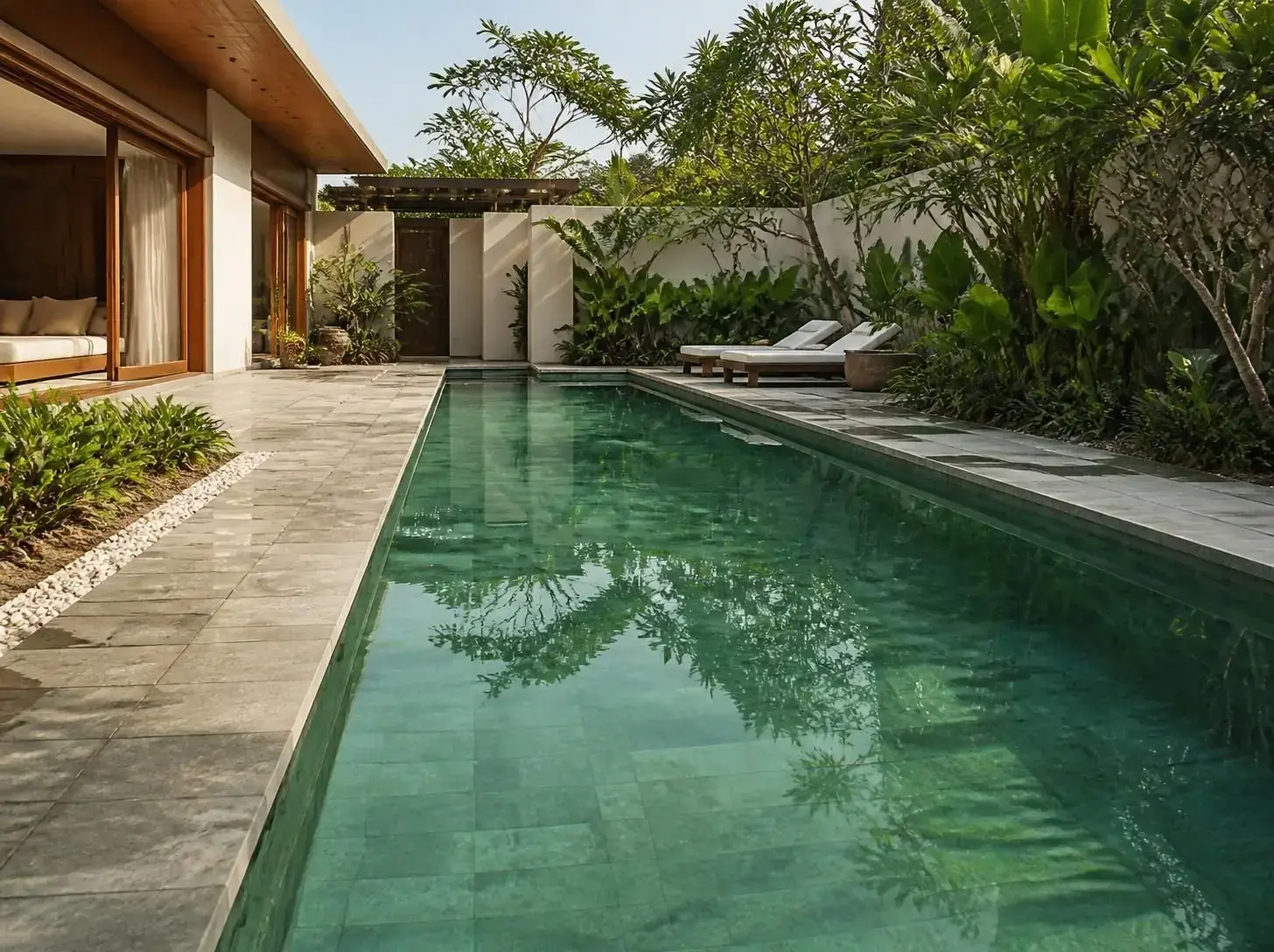
Sukabumi Green Stone is a green natural stone quarried in the Sukabumi region of West Java, Indonesia. If you have ever seen a photograph of a villa pool in Bali where the water reads as a deep, living green rather than the usual swimming-pool blue, you have almost certainly been looking at this stone.
It is the material most associated with Indonesian luxury pool architecture, and it is exported from Indonesia to pool, resort and villa projects on every continent. This guide covers what it is, why it behaves the way it does under water, the different names it trades under, and the practical questions worth settling before you specify it.
Where it comes from
The stone takes its name from Sukabumi, a regency in West Java about three hours south of Jakarta. West Java is volcanic country, and the same geology that produces Indonesia’s andesite and lava stone produces this softer, green-toned material.
Zeolite Factory is based in Sukabumi itself. That matters less for marketing than it does for logistics: the material is selected, cut, calibrated, finished, sorted and packed in the region it comes from, rather than being bought in and resold.
Why the colour changes under water
This is the single most important thing to understand before specifying it.
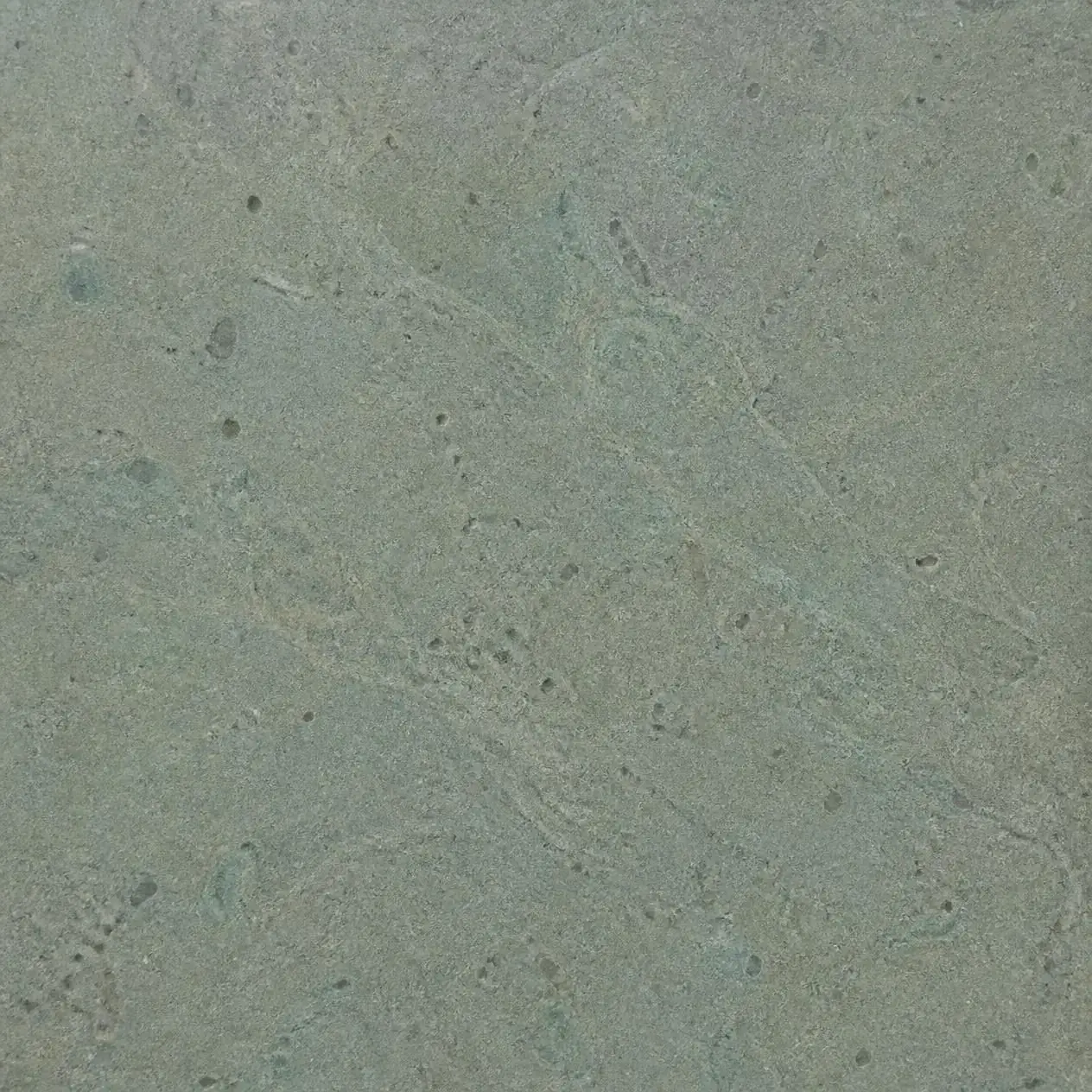
Sukabumi Green Stone is porous and unglazed. Dry, it reads as a soft, pale, slightly grey-green — many buyers seeing a dry sample for the first time are underwhelmed. Wet, the surface darkens considerably, the natural tonal movement inside the stone becomes visible, and the colour deepens into the green that pool designers are actually after.
The practical consequence: always judge the stone from a wetted sample. Pour water over it, or dip it, and look at it in daylight. A dry sample tells you almost nothing about how the finished pool will look.
The second consequence is that no two pools look identical. Water depth, the amount of daylight, the surrounding planting and the pool’s orientation all change how the green reads. A shaded courtyard pool and an open infinity pool clad in the same batch will not photograph the same way.
The names it trades under
The same stone is sold internationally under a list of names, which is a frequent source of confusion when buyers compare offers:
| Market | Names in use |
|---|---|
| International / English | Sukabumi Green Stone, Green Sukabumi Stone, Sukabumi Stone |
| Brazil and Portugal | Pedra Hijau, Pedra Sukabumi, Pedra Verde |
| Spain and Latin America | Piedra Verde Sukabumi, Piedra Sukabumi |
| Indonesia | Batu Hijau Sukabumi, Batu Alam Hijau |
“Hijau” is simply the Indonesian word for green. If you have been quoted Pedra Hijau by one supplier and Sukabumi Green Stone by another, you are comparing quotations for the same material — so compare them on size, thickness, finish, sorting and packing, not on the name.
What it is used for
Overwhelmingly, pools. Within a pool project the stone typically appears as:
- Waterline tiles — the most visible band, usually in a smaller format such as 100 × 100 mm or 100 × 200 mm
- Pool wall and floor tiles — larger formats to reduce joint density
- Steps, benches and beach entries — cut to the pool drawing
- Coping — with a bullnose, half bullnose or square edge with drip groove
- Curved sections — mesh-mounted mosaic where the geometry is too tight for rigid tile
Outside pools it is used for spa and plunge pools, water features and reflecting ponds, bathroom and wet-area surfaces, and interior or exterior wall cladding where a designer wants to carry the pool colour into the building.
Sizes, thickness and finishes
Typical production formats are 100 × 100, 100 × 200, 150 × 150, 200 × 200, 300 × 300, 300 × 600 and 600 × 600 mm, generally in 15, 20 or 30 mm thickness. Custom sizes, free lengths and coping profiles are cut to project drawings.
Three finishes cover most projects:
- Sawn cut — the standard pool interior finish; lightly textured
- Honed — smooth and matte, more common in interiors and decorative work
- Natural / split face — for feature walls and cladding
Bush-hammered and sandblasted finishes are possible subject to availability and order volume. There is more detail in our guide to Sukabumi Green Stone sizes and finishes.
Colour variation is normal — manage it, don’t fight it
Sukabumi Green Stone is quarried material, not a manufactured tile. Colour moves between blocks and between production batches. Some pieces sit lighter, some greyer, some carry more visible veining.
Two things keep this from becoming a problem on site:
- Agree a colour range against a control sample before production. Once there is an agreed reference, sorting has something objective to work to.
- Order the whole pool in one production run. Sorting across a complete order — rather than carton by carton — is what makes a delivery look coherent when it is laid. Material produced six months later will not necessarily match.
If you may need replacement tiles, buy them with the original order and store them. This is the cheapest insurance in the whole project.
Questions worth asking any supplier
- Is the material sorted across the whole order, or packed as it comes off the line?
- Will they produce to a cutting list, or only to standard sizes?
- Is the coping profile produced in the factory, or cut on site?
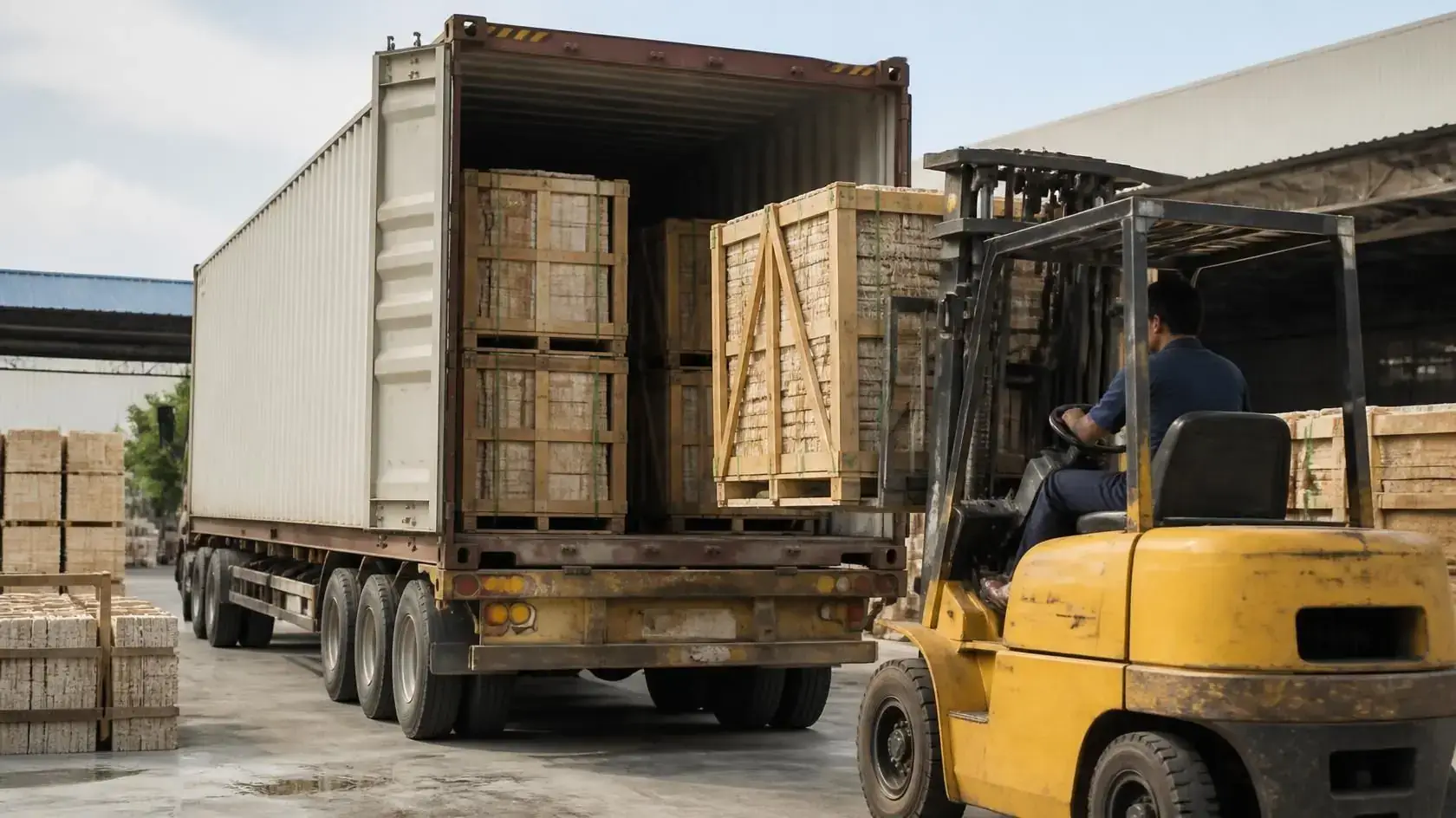
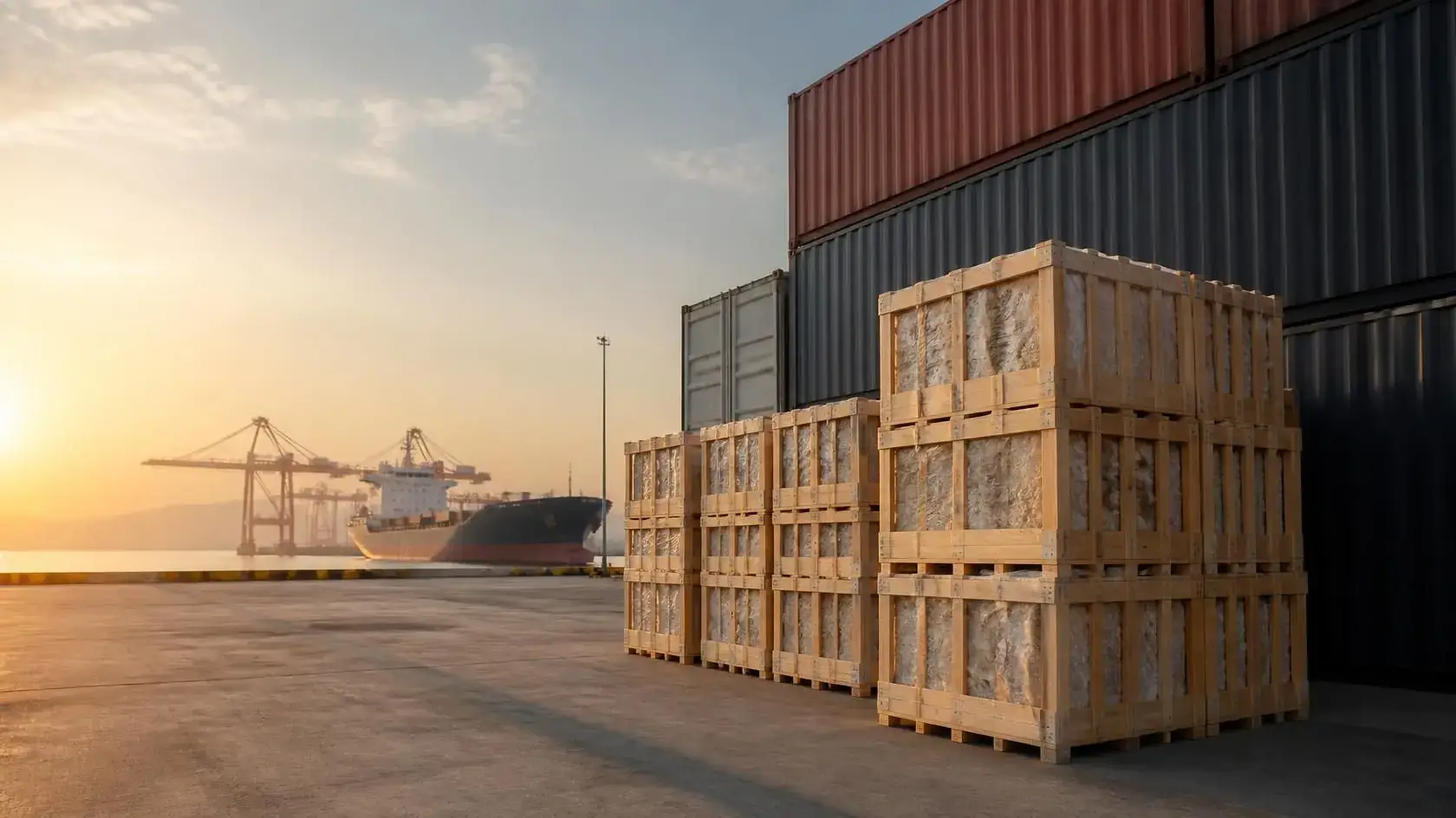
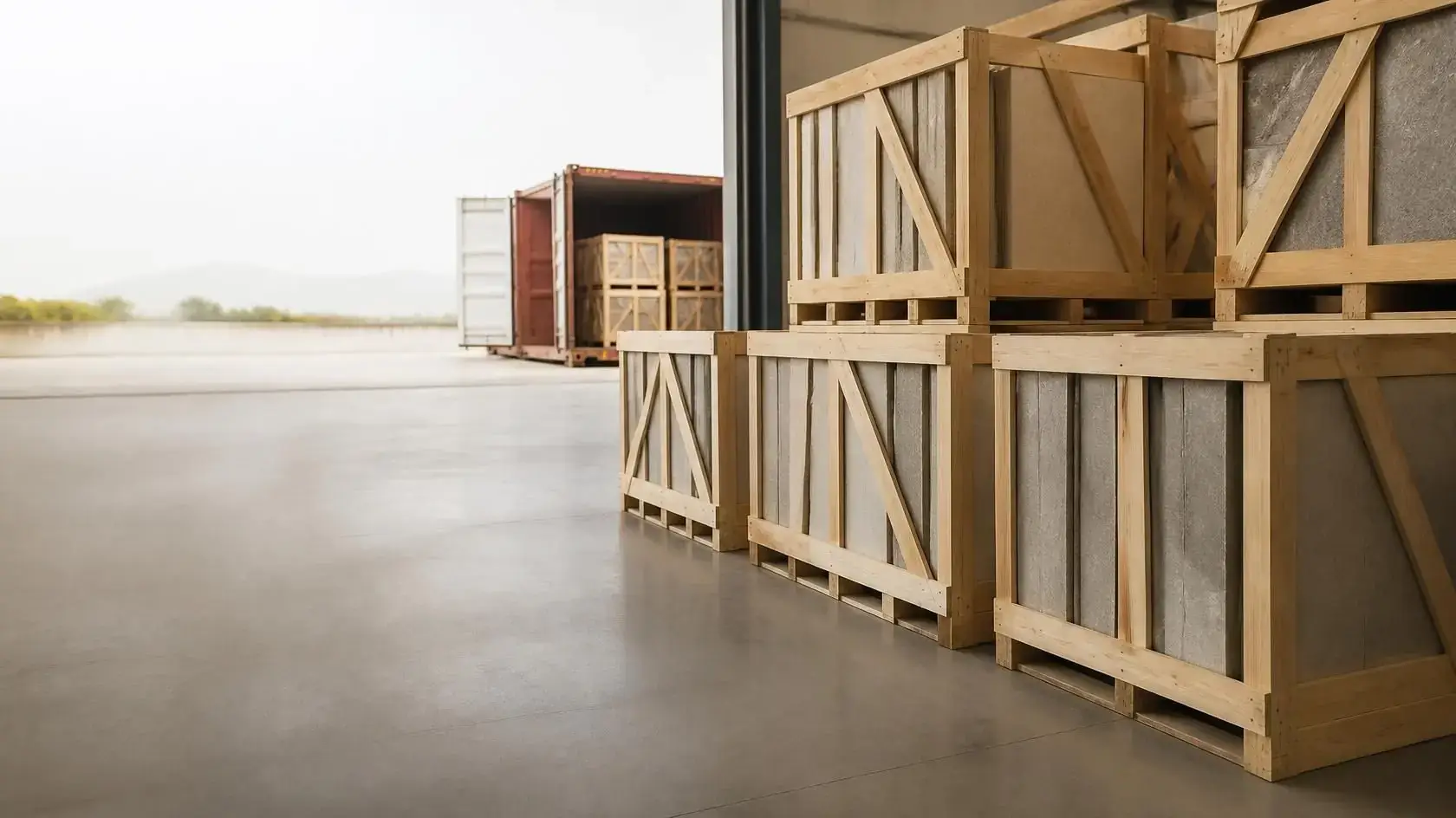
- How is the stone interleaved and crated for a long sea voyage?
- Is there any technical data available for the material?
On that last point, be wary of confident-sounding technical claims that arrive without a document behind them. Our own position is straightforward: technical data is available upon request, and test reports are issued per shipment or per project rather than being published as blanket claims.
Getting a price
To quote accurately we need the stone, the size, the finish, the thickness, the quantity, the destination port and the Incoterm. For a pool, the drawing is worth more than a list of quantities — it lets us break the order down per element and pack the crates by pool area.
Send your specification and our export team will come back with a quotation, or read the full Sukabumi Green Stone product page for the complete specification.
Need a quotation for your project?
Send the stone, size, finish, quantity and destination port. Our export team will come back with a quotation and, where useful, a recommendation.