6 min read Zeolite Factory
Specifying Sukabumi Green Stone comes down to four decisions: format, thickness, finish and edge. This guide covers each one, and what actually drives the choice.
Formats
Typical production formats:
| Format | Common use |
|---|---|
| 100 × 100 mm | Pool waterline, curved sections, small mosaics |
| 100 × 200 mm | Waterline, feature banding, wall detail |
| 150 × 150 mm | Waterline, small pool walls, bathroom surfaces |
| 200 × 200 mm | Pool walls and floors, wet-area flooring |
| 300 × 300 mm | Pool floors, interior floors, terraces |
| 300 × 600 mm | Large pool areas, cladding, floors |
| 600 × 600 mm | Large-format flooring and cladding |
| Custom / free length | Coping, steps, benches, project modules |
Larger formats mean fewer joints, which reads calmer under water and means less grout to maintain. Smaller formats follow curvature better and are conventional at the waterline, where the tile is looked at from close range.
Custom sizes and free lengths are cut to project drawings. If you have a cutting list or a pool drawing, send it — producing to module is what reduces on-site cutting and waste.
Thickness
Standard production thicknesses are 15 mm, 20 mm and 30 mm, with heavier sections for coping, steps and structural elements.
What drives the choice:
- 15 mm — pool interiors and wall applications where weight matters
- 20 mm — the general-purpose thickness for pools, floors and cladding
- 30 mm and above — coping, step treads, and areas taking heavier use
- Custom — produced on request when the detail requires it
Thickness interacts with the fixing system and with the substrate. Confirm with your contractor before finalising, because changing thickness after production is not a small adjustment.
Finishes
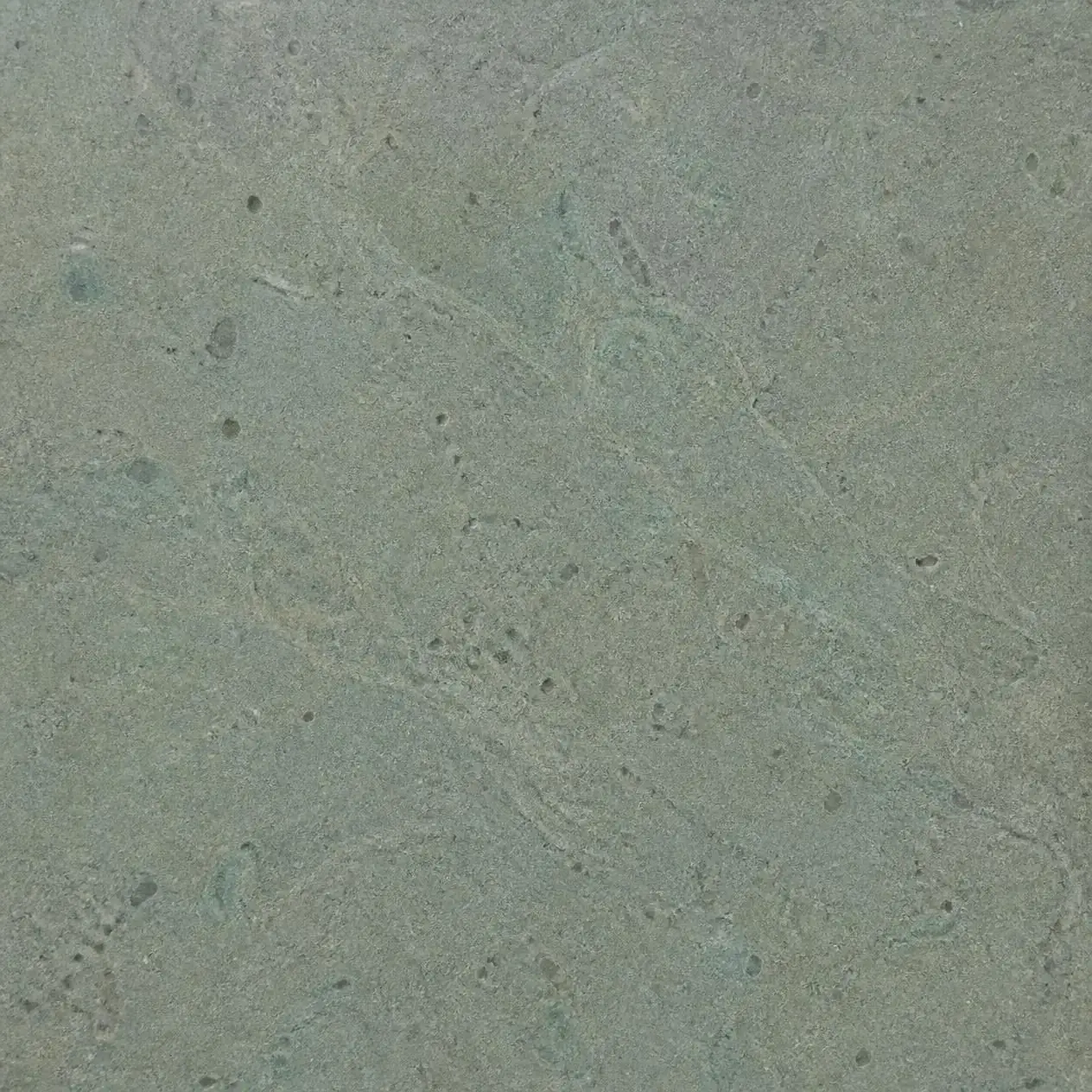
Sawn cut. The standard pool interior finish. Left as the saw leaves it, lightly textured, without the smoothing of a honed surface. This is what most pool projects specify.
Honed. Ground to a smooth matte surface. Used for interiors, bathrooms, spa areas and decorative work where a refined finish is wanted. Smoother underfoot when wet than sawn cut, which is worth considering in circulation areas.
Natural / split face. The stone split rather than cut, leaving an irregular face. Used for feature walls and cladding where texture is the point.
Bush-hammered and sandblasted. Mechanically textured surfaces, used mainly for decks, surrounds and wet external areas. Available subject to availability and order volume — confirm at enquiry stage rather than assuming.
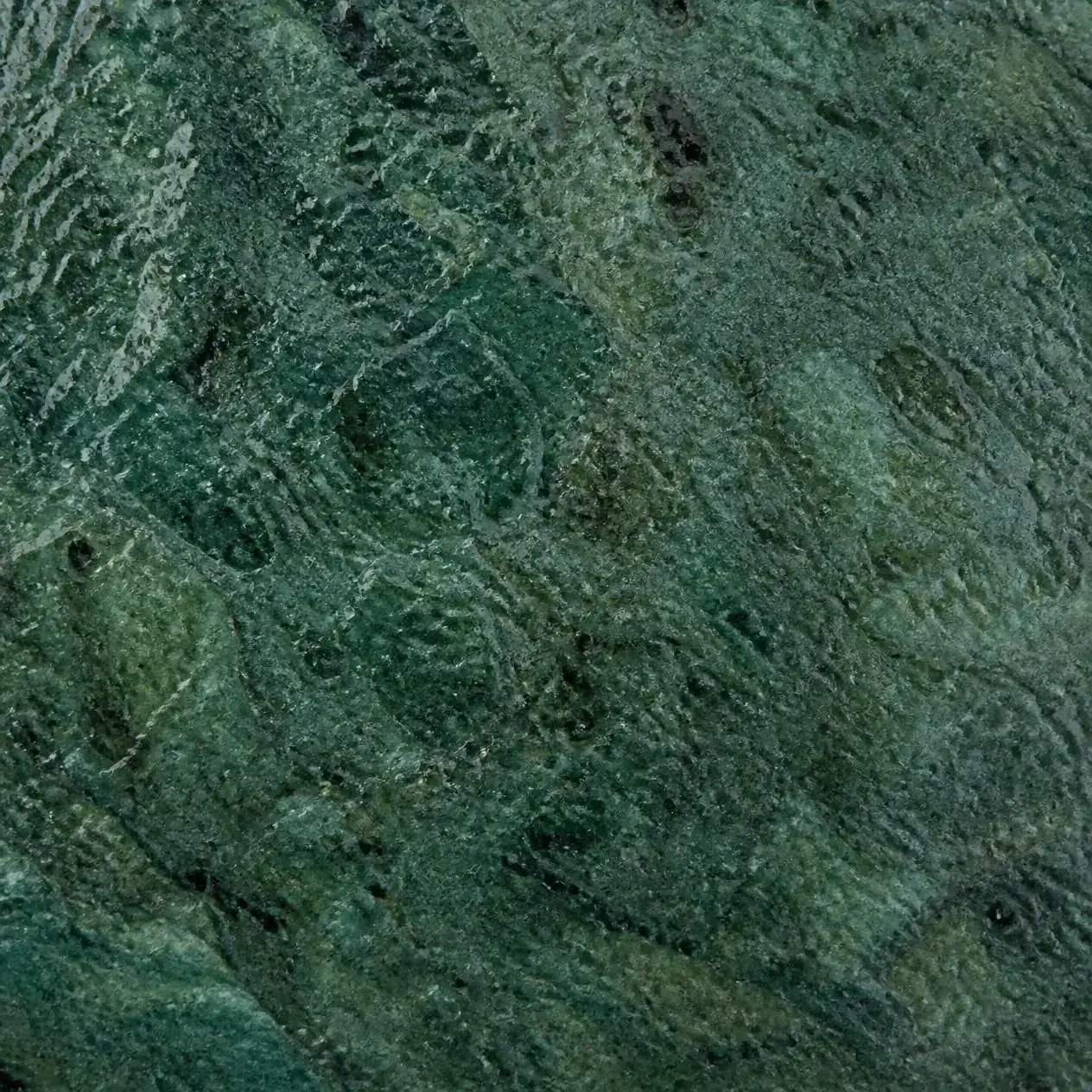
Whichever finish you choose, wet a sample before approving it. Finish changes how much the stone darkens when wet, and how the tonal movement reads.
Edge profiles
For flat tile, a straight sawn edge is standard. Where the stone forms an exposed edge, the profile has to be specified:
- Full bullnose — a fully rounded edge, the most common pool coping profile
- Half bullnose — rounded on the top edge only
- Square edge with drip groove — for coping that overhangs; the groove stops water tracking back under the edge
- Rebated / overflow profile — for overflow and infinity-edge pools
- Chamfered edge — a softened arris on paving and steps
- Mitred corners — so a profile runs continuously around a corner without a visible substrate line
- Radius pieces — cut to the pool radius given on the drawing
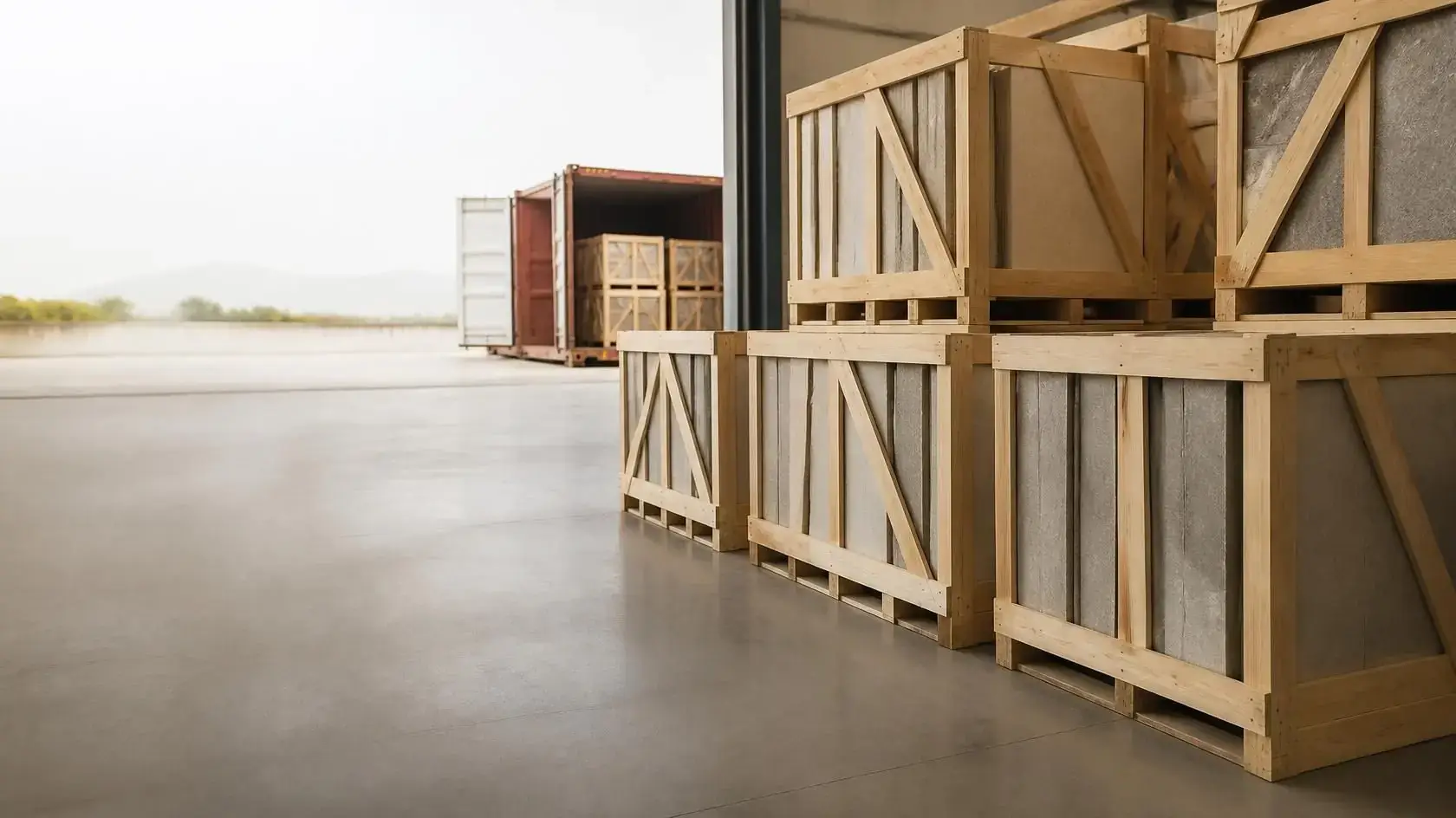
Coping edges are the most closely inspected part of a pool order, and the most vulnerable in transit, which is why they are individually interleaved and corner-protected in packing.
Choosing by application
Pool interior — 100 × 100 or 100 × 200 mm at the waterline, 200 × 200 to 300 × 600 mm on walls and floors, sawn cut, 15 – 20 mm.
Pool coping — 300 × 600 mm or free length, 30 – 50 mm, bush-hammered or sandblasted, with the profile taken from your edge section.
Wall cladding — 300 × 600 or 600 × 600 mm, honed or natural split face, with mitred corner units quantified from the elevation.
Interior flooring — 300 × 300 to 600 × 600 mm, honed, 15 – 20 mm.
Curved geometry — mesh-mounted mosaic in the same stone.
What we cannot tell you without data
You will find websites quoting precise absorption rates, compressive strengths and slip ratings for this material. We do not publish figures we have not verified for the batch in question. Technical data is available upon request, and test reports are issued per shipment or per project.
If your specification requires certified test results, say so at enquiry stage so testing can be arranged with an independent laboratory and built into the programme.
Sending the specification
For a quotation we need: format (or the cutting list), thickness, finish, edge profile where applicable, quantity, destination port and Incoterm. For pools, the drawing is worth more than a quantity list.
Send it to the export team and we will come back with a breakdown and a quotation.
Need a quotation for your project?
Send the stone, size, finish, quantity and destination port. Our export team will come back with a quotation and, where useful, a recommendation.