8 min read Zeolite Factory
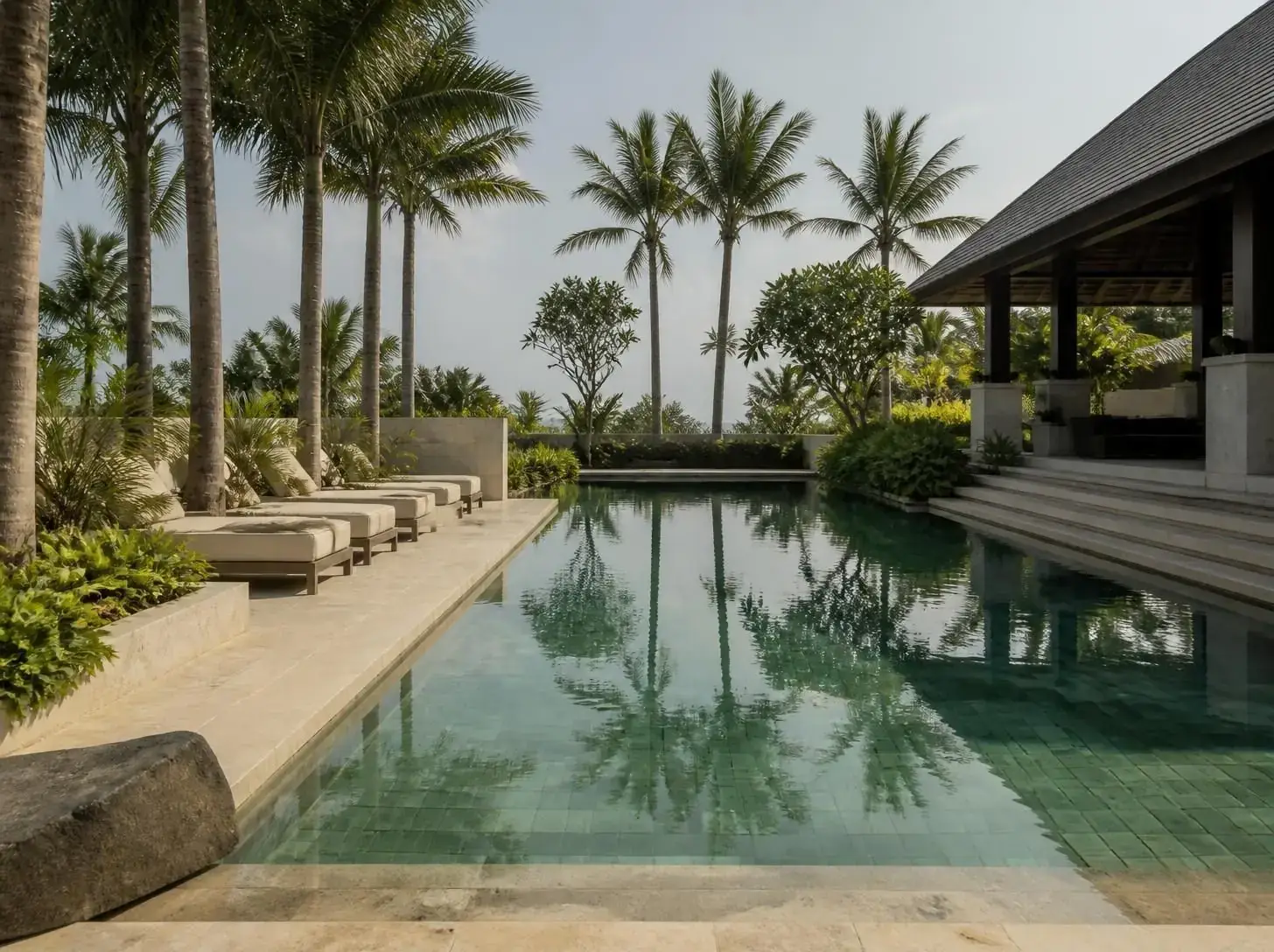
Most enquiries we receive for Sukabumi Green Stone are pool projects — private villa pools, resort pools, spa and plunge pools, and the occasional very large hotel package. This guide sets out how to specify one properly, element by element.
Start with the pool drawing, not a tile size
The most common mistake in a pool enquiry is asking for a single tile size and a total square-metre figure. A pool is not one surface. A typical package contains six distinct elements, each with its own format, thickness and edge treatment:
1. Waterline. The band at water level, the most closely looked-at part of the pool. Usually specified in a smaller format — 100 × 100 mm or 100 × 200 mm — because the smaller module reads better at close range and follows any slight curvature in the shell.
2. Pool wall and floor. Larger formats — 200 × 200, 300 × 300, 300 × 600 mm — reduce joint density across the shell. Fewer joints means less grout to maintain and a calmer surface underwater.
3. Steps, benches and beach entry. Cut to the drawing. Tread pieces need a finished nosing; risers are often a different height on every step in a custom pool, which is precisely why supplying the drawing matters.
4. Coping. The edge that finishes the pool and takes the most handling. Bullnose, half bullnose, square edge with drip groove, or a rebated profile for overflow and infinity-edge pools. Corners are mitred so the profile runs continuously. See the pool coping page for the full range of profiles.
5. Curved sections. Where the geometry is too tight for rigid tile — a curved spa wall, a rounded step — mesh-mounted mosaic in the same stone follows the curve.
6. Surround and deck. The dry area. Often specified in a textured finish, and often in a different stone: andesite for a hard-wearing deck, or light limestone where surface temperature underfoot matters in strong sun.
Send us the drawing and we return a quantity breakdown per element with the quotation, and pack the crates marked by pool area so the installer is not opening everything at once.
Colour: judge it wet, sort it once
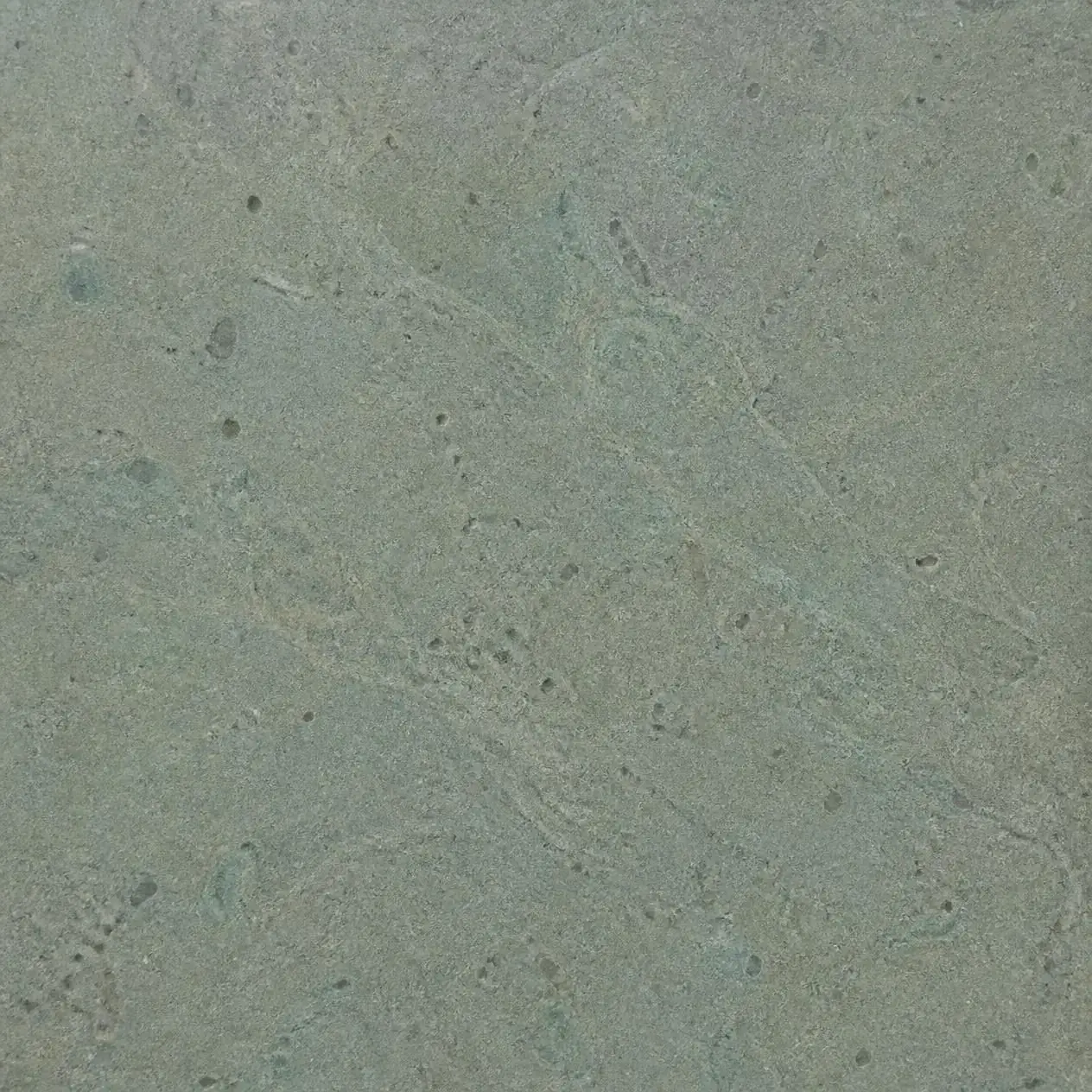
Sukabumi Green Stone deepens substantially when wet. Every colour decision on a pool project should be made from a wetted sample in daylight — never from a dry sample, and never from a photograph on a screen.
Because the material is natural, tone varies between blocks. Two rules keep this manageable:
- Agree a colour range against a control sample before production starts.
- Produce the whole pool in one run, sorted across the complete order rather than carton by carton.
If a pool is being built in phases, tell us at order stage. Material can be reserved from the approved batch for the later phase — but only if we know it is coming.
Formats and thickness
Typical formats used in pools:
| Element | Common formats | Typical thickness |
|---|---|---|
| Waterline | 100 × 100, 100 × 200 mm | 15 – 20 mm |
| Wall and floor | 200 × 200, 300 × 300, 300 × 600 mm | 15 – 20 mm |
| Steps and benches | Cut to drawing | 20 – 30 mm |
| Coping | 300 × 600, 400 × 600, free length | 30 – 50 mm |
These are the formats most projects use, not a fixed catalogue. Custom sizes are cut to the drawing.
Finish
Sawn cut is the standard pool interior finish: lightly textured, and the surface most pool designers specify. Honed is smoother and is more often used in spa interiors and decorative areas. For the dry surround, bush-hammered or sandblasted finishes are usual because they keep texture underfoot when wet.
Slip requirements differ between markets and building codes. Your contractor should confirm which standard applies in the project’s jurisdiction — that is not something a stone supplier can decide for you.
Installation questions to settle before ordering
Natural stone in a permanently wet, chemically treated environment is a system, not just a tile. The adhesive, the grout, the movement joints, the waterproofing behind the stone and the sealing regime all have to be selected together, by the pool contractor and the material supplier for the local climate and water treatment.
Points we recommend clients settle before placing the order:
- Which adhesive and grout system will be used, and are they rated for natural stone in permanent immersion?
- Where do the movement joints fall, and how will they be detailed at the waterline and coping?
- What sealing regime, if any, is being specified — and who maintains it?
- How will the water chemistry be controlled? Aggressive water and unbalanced chemistry affect any natural stone.
- What tile waste allowance is the installer working to for cutting?
We supply the stone and produce it to your drawing. The installation system is your contractor’s call, and a good contractor will have firm views on all of the above.
Ordering spares with the original run
Include a percentage of spare material in the original shipment. Replacements produced later come from different blocks and will not necessarily match the installed pool. Storing two crates of spare tile is inexpensive; re-tiling a waterline because the replacements do not match is not.
Packing and shipping for pool orders
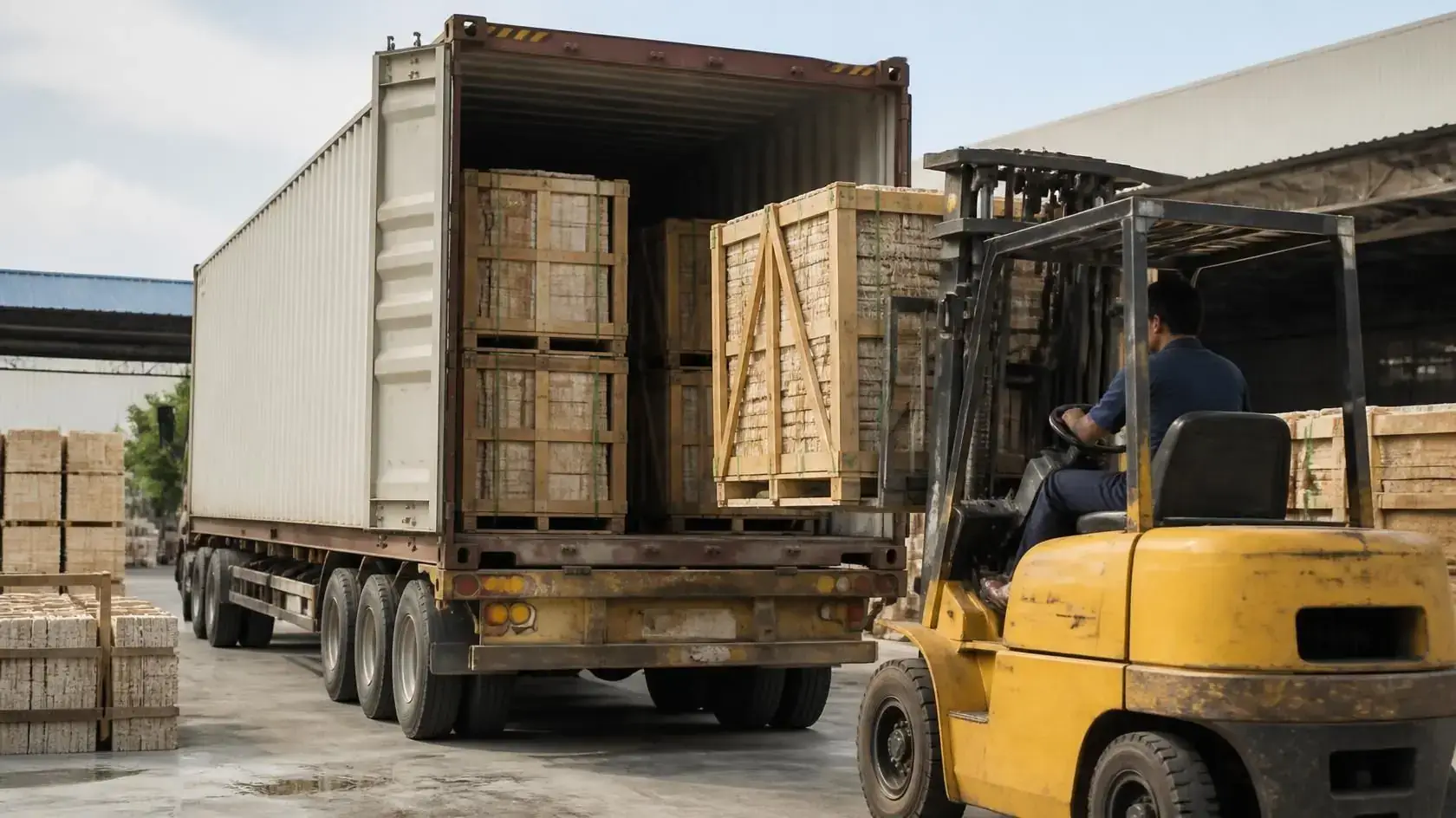
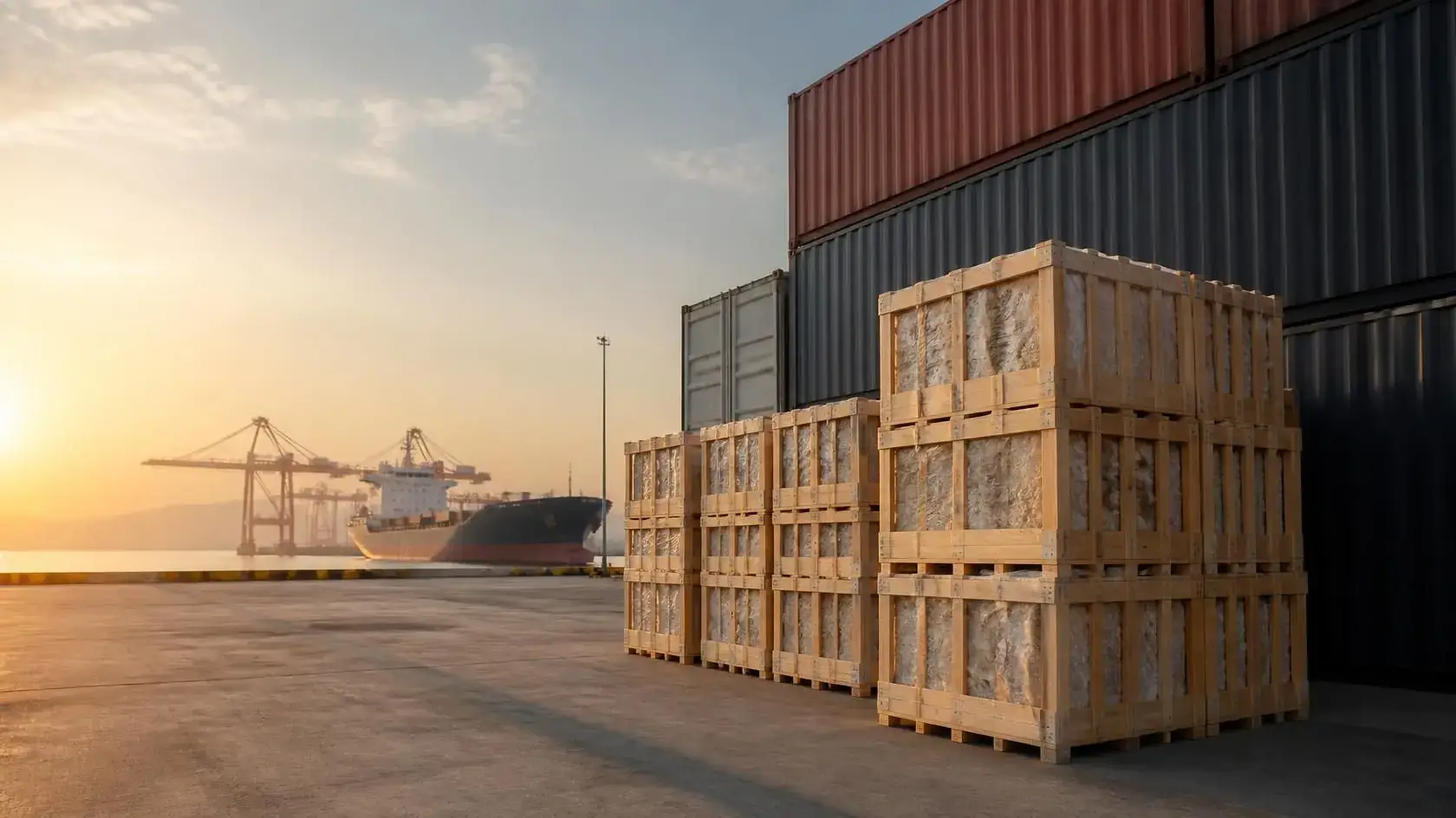
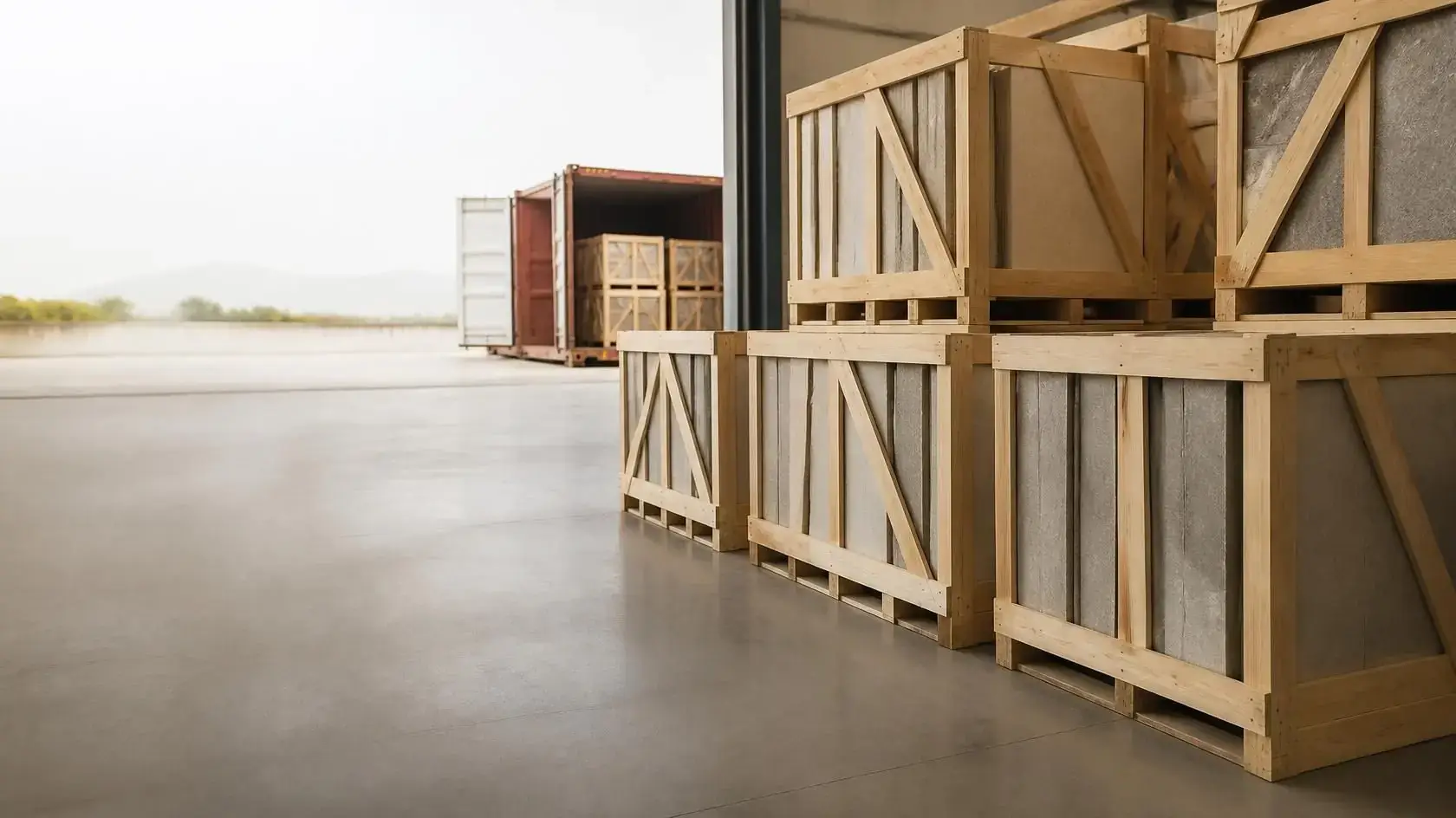
Pool packages are packed and marked by area — waterline, wall, floor, steps, coping — so material can be distributed on site without opening every crate. Faces are interleaved, coping edges get corner protection because the profile is the most vulnerable part of the order, and crates are built on fumigated timber for the sea voyage.
Quotations are issued on EXW, FOB, CFR or CIF terms. Shipping availability and freight rates depend on destination, carrier and shipment period. The full sequence is set out on our export process page.
Summary checklist
Before you send a pool enquiry, have these ready:
- Pool drawing with dimensions and setting-out
- Areas: waterline, wall, floor, steps, coping, deck
- Preferred formats and thickness, or a request for our recommendation
- Finish for the interior and for the dry surround
- Destination port and Incoterm
- Required delivery period
- Spare material percentage
Send it to the export team and we will come back with a breakdown and a quotation.
Need a quotation for your project?
Send the stone, size, finish, quantity and destination port. Our export team will come back with a quotation and, where useful, a recommendation.